
Agencies
Ambassador program software for agencies
Run ambassador, affiliate, and creator programs for every client from one agency login — separate accounts per client, client-ready reporting, and revenue share on the brands you bring over.
Partner-only training, sales enablement, and templates included. Listed in the Roster agency partner directory.

Why agencies add an ambassador program to their offer
Paid social efficiency keeps declining, and clients keep asking what comes next. An ambassador or creator program is one of the few answers that gets cheaper over time rather than more expensive.
For an agency it is a retainer-shaped service: recruiting, campaign operations, submission review, and monthly reporting are ongoing work, not a one-off build.
The Roster partner program exists to make that practical — revenue share on the brands you refer or manage, partner-only enablement material, and a directory listing that sends inbound your way.
Why agencies struggle to offer this
The service is sellable. The operations usually are not.
Every client is a different stack
A referral app here, a spreadsheet there, an affiliate network somewhere else. Nothing your team learns on one account transfers to the next.
Reporting is rebuilt monthly
Pulling revenue, reach, and content into a client-ready deck by hand is the work that quietly kills the margin on the retainer.
No margin in reselling
Passing a client to a tool you get nothing from means the platform captures the recurring revenue and you keep only the labour.
How agencies run this on Roster
Four stages, from your first client account to a repeatable service line.
Stage one
Stand up a client account
Each client gets their own account, with programs inside it for ambassadors, creators, affiliates, or athletes. Templates preload sensible settings per audience, and a working program can be duplicated — so the second client takes a fraction of the time the first did.
Programs and templates →
Stage two
Recruit and launch
Embed the application form on the client’s brand site, import their existing roster by CSV, or nominate customers directly from their contact list. Social listening surfaces the people already tagging the client, and Instagram creator discovery finds new creators who fit — the fastest way to fill a roster you did not inherit.
Recruitment and campaigns →
Stage three
Run the monthly rhythm
Campaign briefs, bite-sized actions, submission review with tag-based whitelisting so you are not approving everything by hand, and reward fulfilment that generates Shopify orders itself. Run the client’s best creator posts as Meta Partnership Ads too — a paid-media service you can bill on top of the retainer. This is the recurring work the retainer is actually paying for.
Campaigns, actions, and rewards →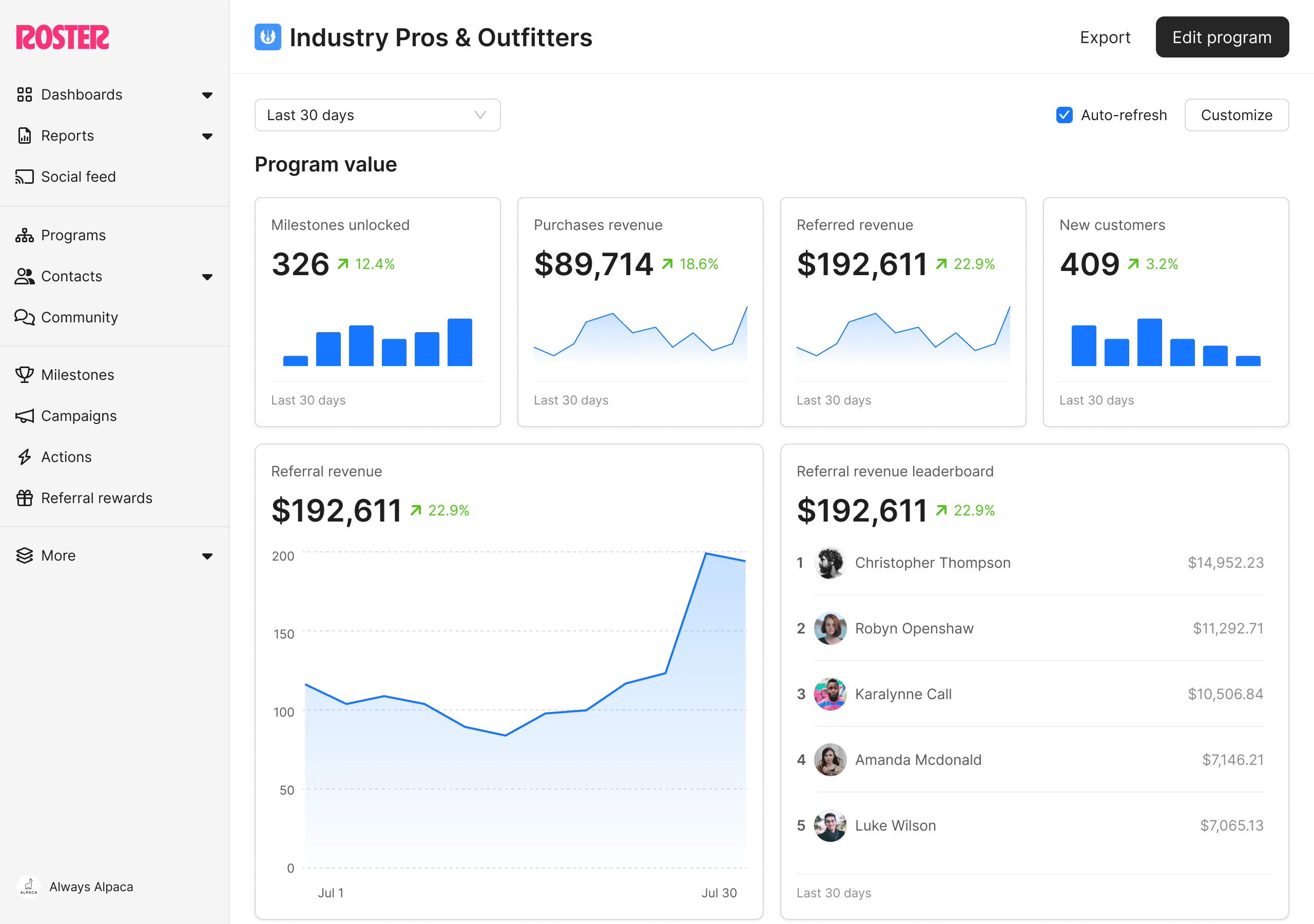
Stage four
Report and prove the margin
Customizable dashboards at brand and program level, exportable directly rather than rebuilt in slides. Referred revenue, new versus returning customers, reach, engagement, and earned media value — the numbers that keep a retainer renewed.
Dashboards and reporting →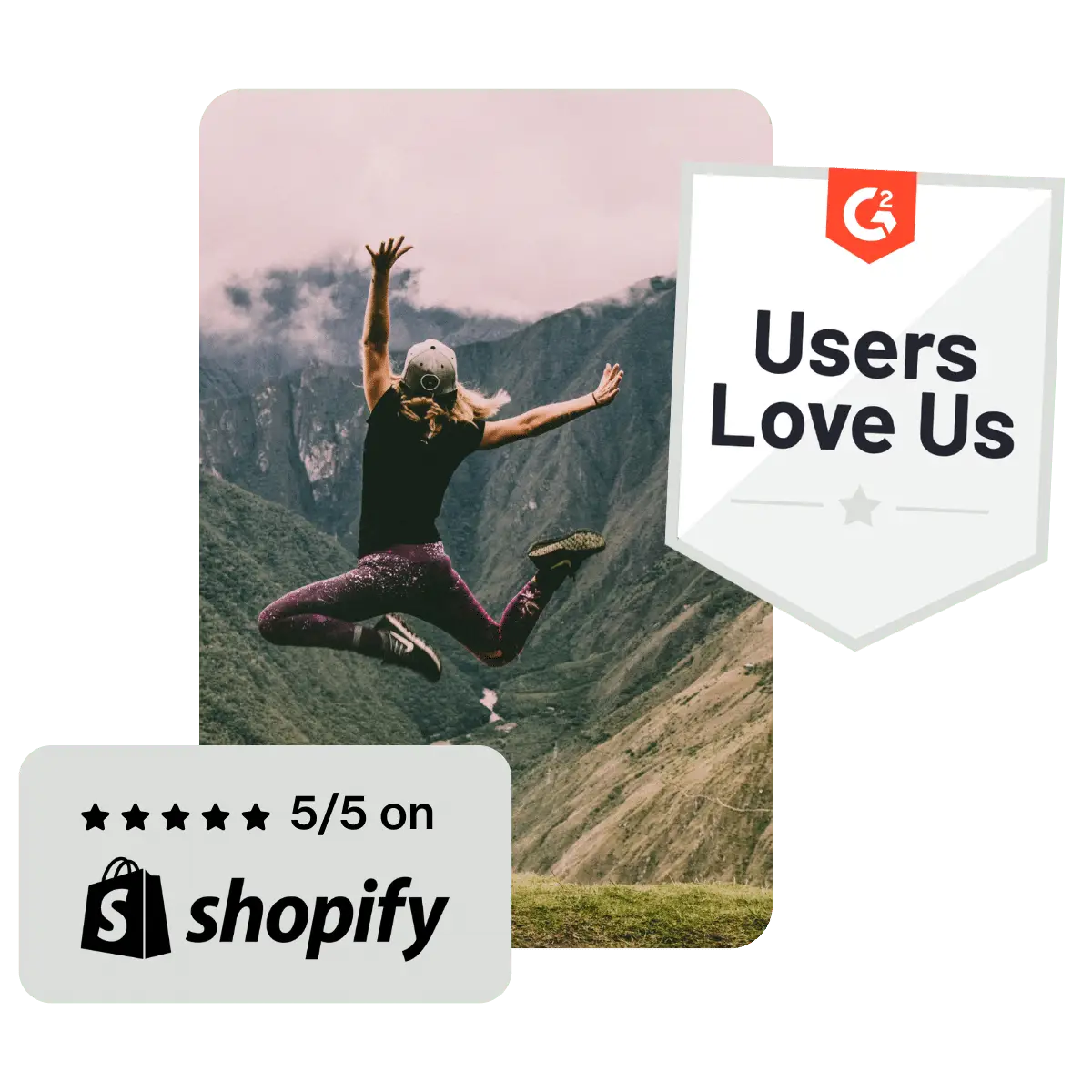
What you are probably comparing this against
An honest read on where each option stops.
Building it per client
Whatever tool that client already has- No new vendor conversation to have
- Nothing your team learns transfers across
- Reporting rebuilt from scratch every month
- No recurring revenue for the agency
- Quality depends entirely on who staffed it
Reselling an affiliate tool
Commission tracking, marked up- Simple to explain and quick to launch
- No campaigns, content, or seeding to sell
- Thin service layer, thin retainer
- Little to report beyond commission
- Client can go direct at any point
Roster partner program
One platform across every client- Separate accounts, one agency login
- Revenue share on brands you refer or manage
- Partner-only enablement and training
- Exportable client-ready reporting
- Listed in the agency partner directory
- Creator discovery and UGC ads to sell as services
Programs your clients could be running
Three brands, three very different shapes.
 350M+ reach
Moved a worldwide athlete program off spreadsheets and reached 350M people without buying a single ad.
Salomon · Outdoor apparel
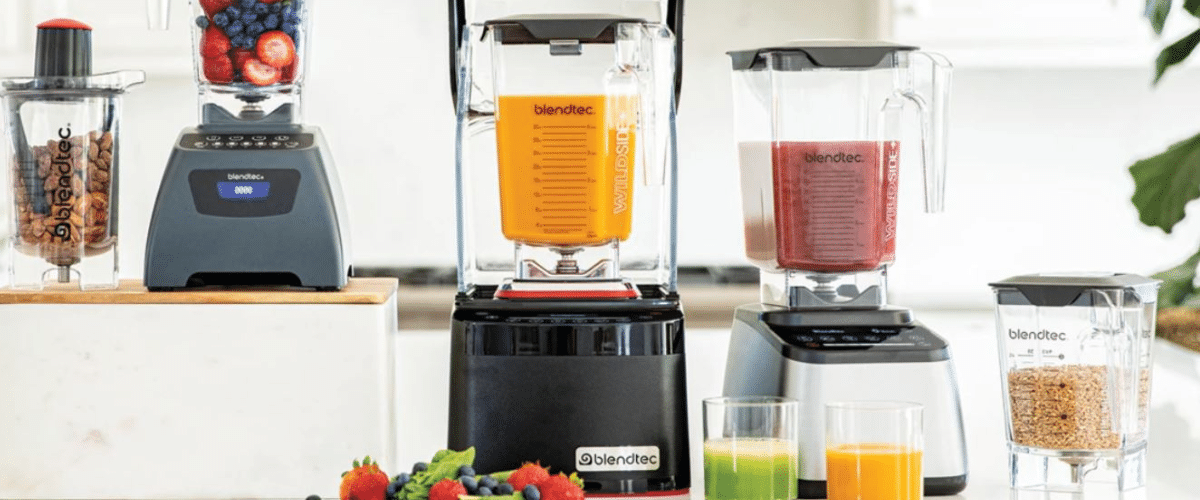 10% of DTC sales
Built a new sales channel from existing customers, from zero to over 100 ambassadors in under a year.
Blendtec · Home goods
 5,400% growth
A two-person team went from ten people mentioning them to over 550 ambassadors, on a few hours a week.
GoBe Kids · Consumer goods
Is the partner program a fit for your agency?
Worth knowing before you spend thirty minutes with us.
Ecommerce clients
Shopify, BigCommerce, and WooCommerce brands past roughly $1M in revenue or 10,000 customers.
A retainer model
This is ongoing operations, not a build-and-hand-over project. It suits agencies who already run monthly services.
Someone to run it
A few hours a week per client once it is going. The first client takes longer than the fifth.
An appetite to co-market
Partners who publish, speak, and co-market get the most out of the directory and the enablement material.
Revenue share terms and partner tiers are discussed directly rather than packaged.
Agency partner FAQ
How does the revenue share work?
Partners earn revenue share on the brands they refer or manage. Terms depend on volume and whether you are referring or actively running the program, so they are discussed directly rather than published.
Do we manage clients from one login?
Each client has their own account with their own programs, contacts, and reporting. Ask about agency access when you speak to us, since setup depends on how many accounts you are running.
What support do partners get?
A personal CSM, partner-only training, sales enablement material, templates, content, and early access to beta releases. There is also an agency partner directory listing.
Can we white-label the platform?
The ambassador-facing portal and emails carry your client’s branding — logo, colors, and copy. The platform itself is Roster, and most agencies position that as a strength rather than hiding it.
What size client does this suit?
Ecommerce brands past roughly $1M in revenue or 10,000 customers. Below that there usually are not enough advocates for a program to pay for itself, and the retainer is hard to justify.
How long does a client take to launch?
A first program can be configured in days. Filling the roster is the longer part, and it moves fastest when the client already has customers tagging them on social.