
Payments
Pay ambassadors without a spreadsheet
Pay commissions for the sale and cash rewards for the work, in one batch. Fully automated monthly payouts with tax compliance built in, direct PayPal and Venmo batches, or commission calculation only if you would rather pay through your own system.
W-9, W-8BEN, and 1099 filing handled on automated payments.

Paying creators is an operations problem
It is monthly, it is manual, and it is the thing that makes ambassadors quit.
The spreadsheet ritual
Export commissions, reconcile refunds, chase payment details, upload a batch, fix the failures, repeat next month.
Tax season arrives anyway
Collecting W-9s from two hundred creators and filing 1099s is not a marketing job, but it lands on marketing.
PayPal is not universal
Forcing every ambassador onto one payout method loses you the ones who do not use it.
Three ways to pay
Pick one, or run more than one at the same time.
Automated payments
Connect a business bank account, enroll your programs, and payments go out on the first Tuesday of every month. Roster pulls the ACH funding automatically ten business days ahead and sends you a PDF invoice seventeen business days ahead.
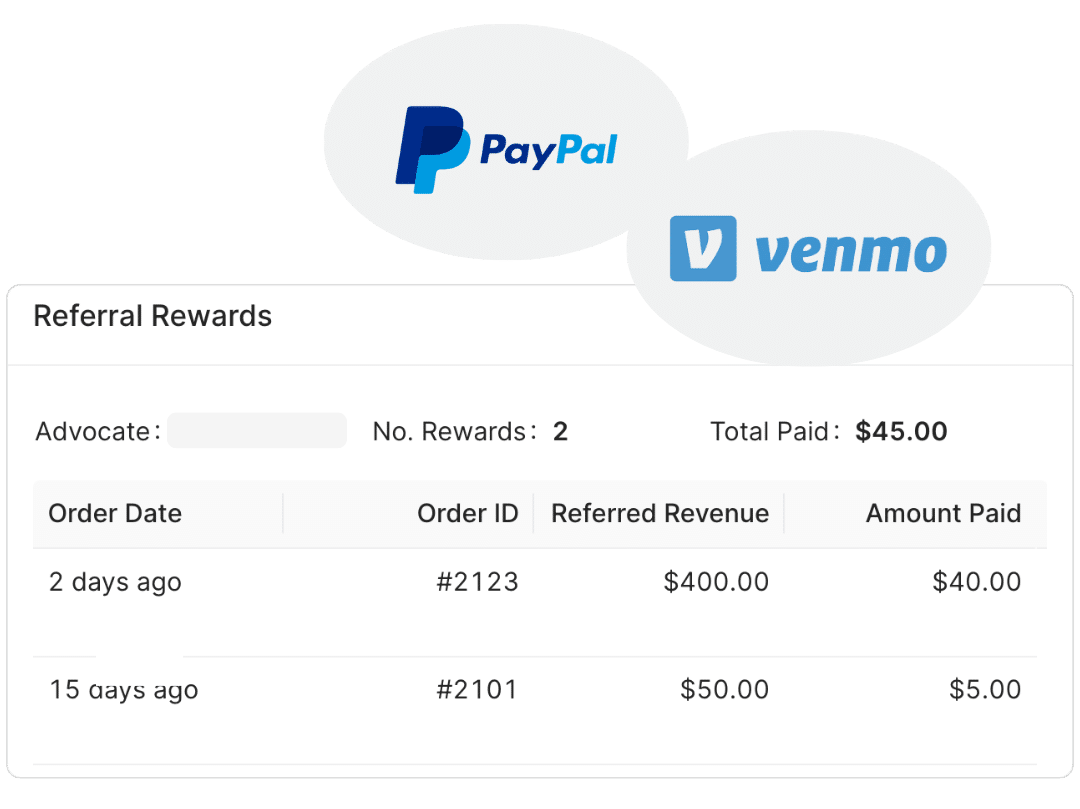
PayPal and Venmo
Keep manual control over each batch while sending from inside Roster using your own PayPal account, with real-time status and full history.
External payments
Use Roster for commission calculation, approval, and tracking, then export a CSV and pay through Wise, Payoneer, store credit, payroll, or whatever you already use. No per-payment platform fee.
Cash Rewards
Pay for the work, not just the sale
Commissions pay ambassadors when they drive a sale. Cash Rewards pay them for the work itself: completing a campaign, hitting a milestone tier, or a one-off bonus. Set a flat amount in the campaign builder or on a milestone tier. The ambassador sees it up front, earns it on completion, and it pays out in the next batch alongside their commissions. One process, one reconciliation.
Pay your own people directly
No marketplace and no middleman cut. The reward goes to the ambassador you already work with.
No hold period
Paid on approval in the next batch, not weeks later. There is no order to refund, so no returns window to wait out.
No pre-funding
No escrow and no budget cap. A reward is created on completion and paid in the normal batch.
Same controls
Your existing approval flow, minimum payout, and tax handling (W‑9, W‑8BEN, and 1099s on automated payments).
Cash Rewards are included on every plan.
What you get either way
Automated
A payment cycle that runs itself
Ambassadors set up a secure wallet once, verifying phone and identity and completing a W-9 or W-8BEN. After that they choose how to withdraw — bank, PayPal, Venmo, Cash App, prepaid Visa, or Amazon gift card — and change it whenever they like.
Reminders to complete setup go out at 26, 20, 14, 8, and 3 days before each payment. Anyone who misses a cycle is included in the next one automatically. Nothing is lost.

Tax
1099s stop being your problem
Tax forms are collected during wallet setup, so by the time a first payment goes out the paperwork is already on file. Roster’s payment platform tracks totals through the year and files 1099s for US ambassadors who hit the IRS threshold.
Sensitive tax data is never stored in Roster and is not visible to your team. You see payment readiness, not somebody’s social security number.
Worth planning for
Commission cutoff runs a month behind
On automated payments the cutoff is the last day of the month two months before the payment month — commissions through December 31st are paid on the first Tuesday of February. That lag is deliberate: it covers your returns window so you are not clawing back commission on refunded orders.
Choosing a method
The honest version of which one suits you.
Automated
Large or growing roster, want zero manual work, want tax handled. Per-payment fee applies.
PayPal and Venmo
Smaller batches, want manual control, ambassadors already on PayPal. You fund the balance.
External
You have a payment platform you like, or you pay in store credit or gift cards. No platform fee.
Mixed
Perfectly normal. Different programs can use different methods.
Switching methods later does not lose unpaid commission history.
Related features
Questions brands ask
What’s the difference between commissions and cash rewards?
Commissions pay for sales. Cash rewards pay for work, like completing a campaign or reaching a milestone. Both pay out in the same batch.
Do I need to pre-fund cash rewards?
No. There is no escrow and no budget cap. A cash reward is created when the ambassador completes the work and is paid in the normal batch.
When do automated payments go out?
The first Tuesday of every month, with the commission cutoff on the last day of the month two months prior.
Do ambassadors need PayPal?
Not for automated payments. They set up a wallet and withdraw to a bank account, PayPal, Venmo, Cash App, a prepaid Visa, or an Amazon gift card.
Who handles 1099s?
On automated payments, Roster’s payment platform collects W-9 and W-8BEN forms and files 1099s for US ambassadors who meet the threshold. Payments made outside that system are not included and remain your responsibility.
What if someone has not set up their wallet?
They are skipped for that batch and their commissions roll forward to the next one after they complete setup.
Can we avoid tiny payments?
Yes. Set a brand-wide minimum — $10, $25, and $50 are common — and balances accumulate until they clear it.
What about international ambassadors?
A 3% international fee applies. You choose whether your brand absorbs it or it is deducted from the payout.