
Sales attribution
Know which ambassador earned which order
Roster attributes every order using a documented five-rule hierarchy — referral link, shareable code, recurring order, and two kinds of personal purchase — so commission conversations end with evidence.
Last-click. No split attribution. Rules published, not inferred.

Attribution arguments cost you good ambassadors
If the rules are unclear, every disputed order becomes a support ticket.
Nobody knows which rule fired
When an order could plausibly be credited three ways, and the platform will not say which it chose, you cannot defend the number.
Codes leak and links expire
A shareable code has no attribution window. A referral link does. Confusing those two produces payouts you did not intend.
Personal purchases get paid as referrals
An ambassador buying for themselves is not a referral. Platforms that miss the distinction quietly inflate your commission line.
How an order gets attributed
Five rules, checked in order, first match wins.
Personal order checks run first
If the buyer email matches an ambassador in an active program, it is a personal order. If the order used a personal or reward discount code assigned to an ambassador, same result. Neither earns commission.
Then referred order checks
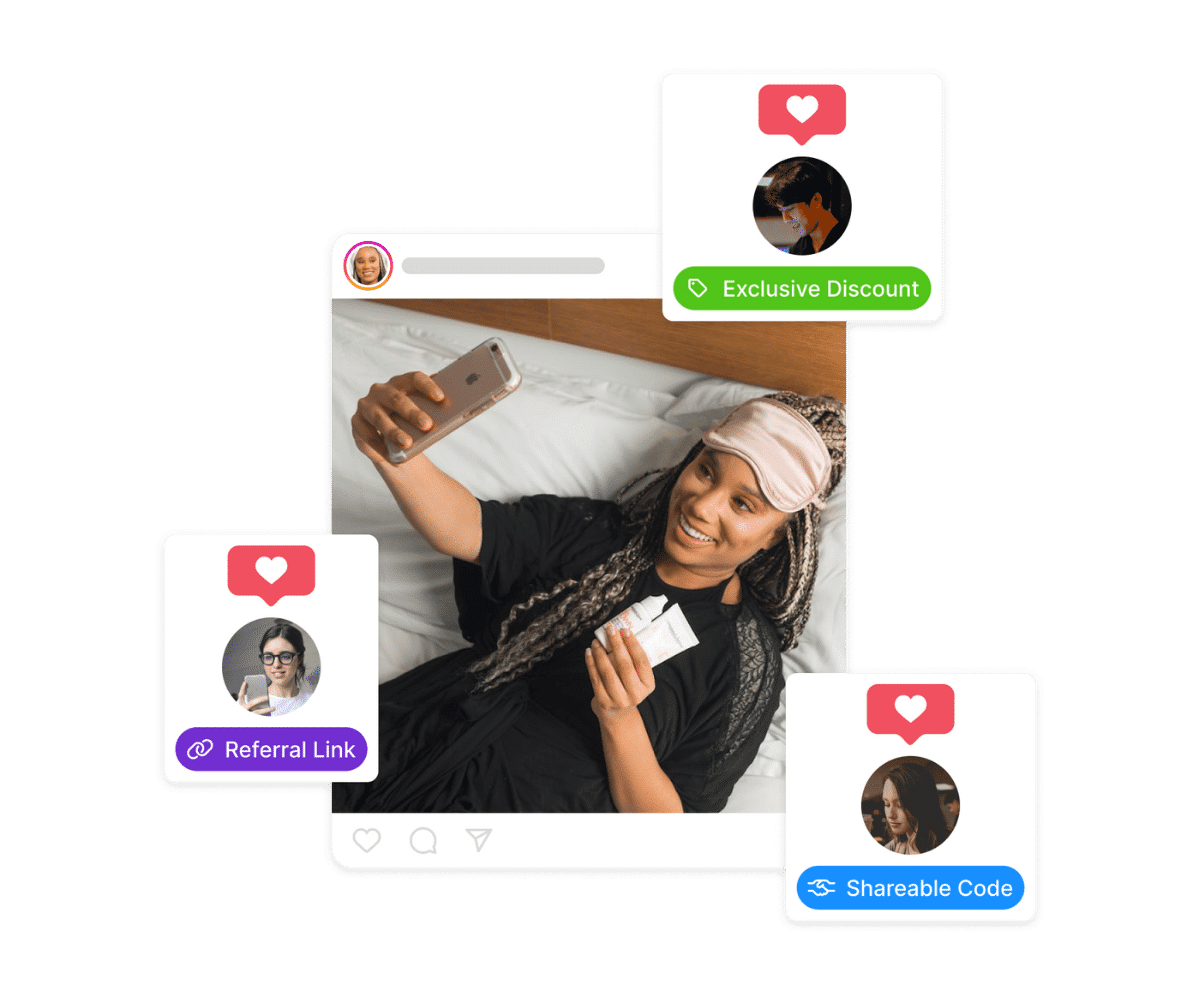
A referral link click within the attribution window wins next. Failing that, a shareable code assigned to an ambassador. Failing that, a recurring order from a customer they originally referred, inside your eligibility window.
No match, no attribution
If none of the five rules apply, the order is simply unattributed. Roster does not guess, and it does not split credit between two ambassadors.
What the reporting gives you
Tracking
Two pixels, and a validator so you know they work
A link tracking pixel runs on every page and stores the referral link ID. An order tracking pixel fires on the confirmation page and sends the order. On Shopify both install automatically when you connect the app, and uninstall cleanly when you remove it.
For everything else there are platform guides for BigCommerce, WooCommerce, Wix, headless Shopify, and generic sites, plus a server-side API method.
Verification
A Chrome extension instead of dev tools
The free Roster Pixel Validator reads browser state and tells you whether the pixel is installed, whether a referral click is being tracked, how much of the attribution window remains, and whether a discount code is cached and fresh.
It means a marketer can diagnose a tracking problem without opening the network tab or booking developer time.
Repeat revenue
Credit for the customers they keep bringing back
Recurring order tracking gives an ambassador credit when a customer they originally referred buys again inside your eligibility window — without clicking the link again or reusing the code.
It can be enabled independently for commissions and for points, set per program, and optionally restricted to customers who were new to your brand at first referral.
Last click
Two links clicked, one ambassador paid
If a customer clicks Alice’s link on Tuesday and Bob’s on Thursday before buying, Bob is credited. Roster uses last-click and does not divide a single order between ambassadors — which keeps your commission line predictable and your payout disputes short.
Where tracking breaks
The four causes worth knowing before you blame the platform.
Cookie consent
On Shopify, a visitor who has not accepted the banner blocks Web Pixels, which blocks tracking.
Google Tag Manager
Increasingly blocked by browsers and extensions. Install pixels directly in your theme.
Dropped parameters
A redirect that strips the query string removes the referral ID before the pixel ever sees it.
Cross-domain checkout
If checkout sits on a different domain than the landing page, link data cannot follow the session.
Each of these is diagnosable in a minute with the pixel validator.
Connected to attribution
Questions brands ask
What is the attribution window?
It is configurable per program on the smart link, commonly 30 days. Shareable codes have no window, which is one reason leakproof codes are recommended.
Do you split credit between ambassadors?
No. Roster uses last-click attribution and assigns the whole order to one ambassador.
What if an ambassador buys something themselves?
It is recorded as a personal order, tracked and reported, but not eligible for referral rewards.
What happens when an order is refunded?
A change to financial status, subtotal, total, referral ID, or discount code retriggers both order processing and attribution, so rewards adjust.
Do we need a developer?
On standard Shopify, no — pixels install with the app. On other platforms a developer follows a documented snippet, then anyone can verify it with the Chrome extension.
Can an ambassador earn on repeat purchases?
Yes, if recurring order tracking is enabled for their program and the repeat order falls inside your eligibility window.