Affiliates
Affiliate software for DTC and ecommerce brands
Personal links and codes, commission structures you control down to the individual, and payouts by PayPal, Venmo, or fully automated ACH with tax filing handled.
4.8 on the Shopify App Store. Run affiliates alongside ambassadors and creators in the same account.

What is an affiliate program for an ecommerce brand?
An affiliate program pays a commission to people who send you sales. Each affiliate gets a trackable link and usually a discount code, and earns an agreed rate on the orders that result.
For an ecommerce brand the useful distinction is not affiliate versus ambassador — it is whether the person is paid in cash or in product and status. Roster runs both, in separate programs, from one account.
The hard part is never issuing the links. It is attributing orders defensibly, handling refunds without clawing back the wrong commission, and paying a few hundred people every month without it becoming somebody’s week.
Where affiliate programs get expensive
Usually in operations and in leakage, not in the commission rate.
Payouts eat a week a month
Export commissions, reconcile refunds, chase payment details, upload a batch, fix the failures. Then collect W-9s and file 1099s in January.
Disputed orders have no answer
If you cannot show which rule credited an order and why, every disagreement becomes a support thread you lose by default.
Codes leak to coupon sites
A vanity code posted to a browser extension pays commission on customers who were already at checkout. That is margin, not acquisition.
How Roster runs an affiliate program
Four stages, each replacing something you are currently doing by hand.
Stage one
Recruit and approve
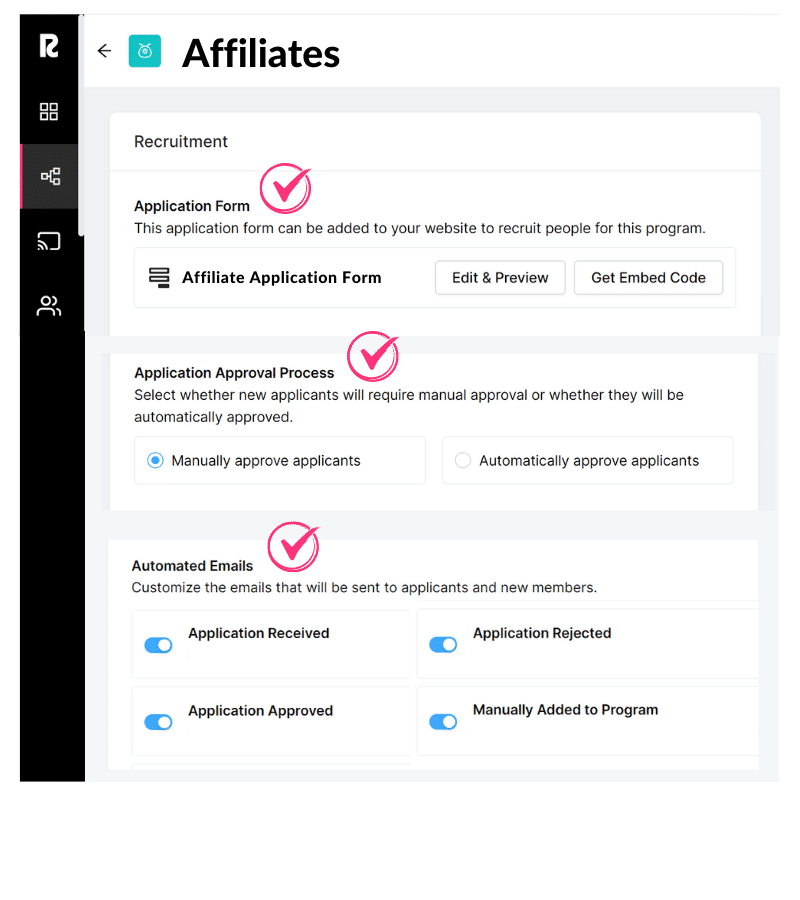
Embed an application form on your brand site, collect the fields you actually need, and review applicants in a queue built for volume — search, filter, bulk approve or reject, and tag as you go. Contact tags later drive commission overrides, so segmentation starts at intake.
Recruitment forms and applicant review →
Stage two
Issue links and codes
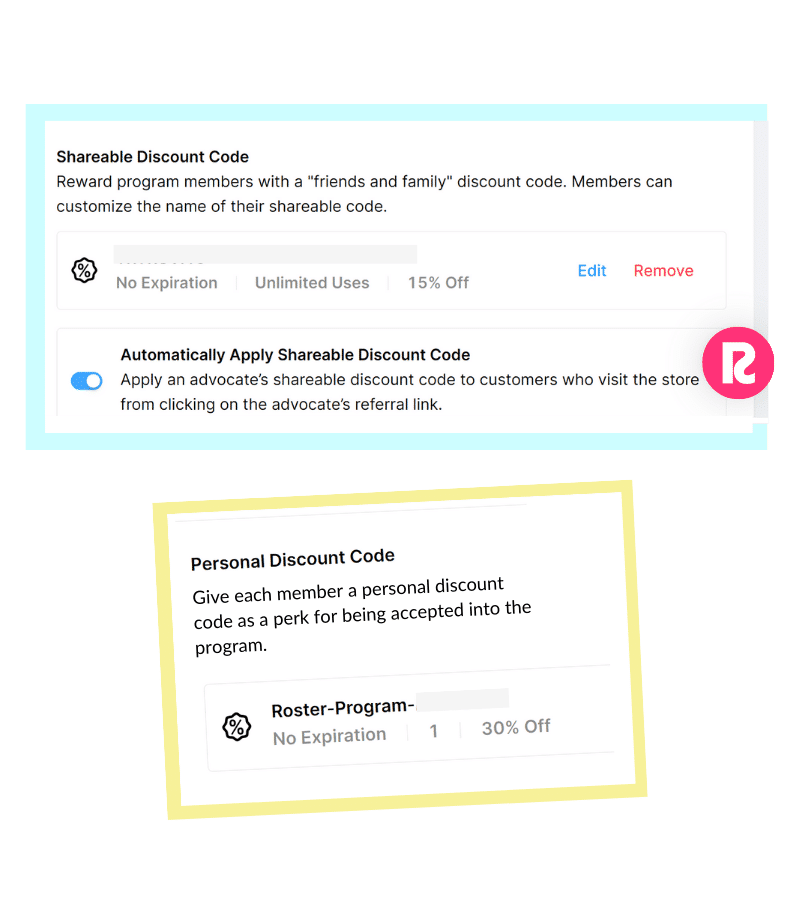
Every affiliate gets a clean rstr.co short link that keeps working when you change the destination, plus a shareable code. On Shopify, leakproof codes generate a fresh single-use code at click time, so a code posted to a coupon site is already spent.
Codes and links →
Stage three
Set the commission
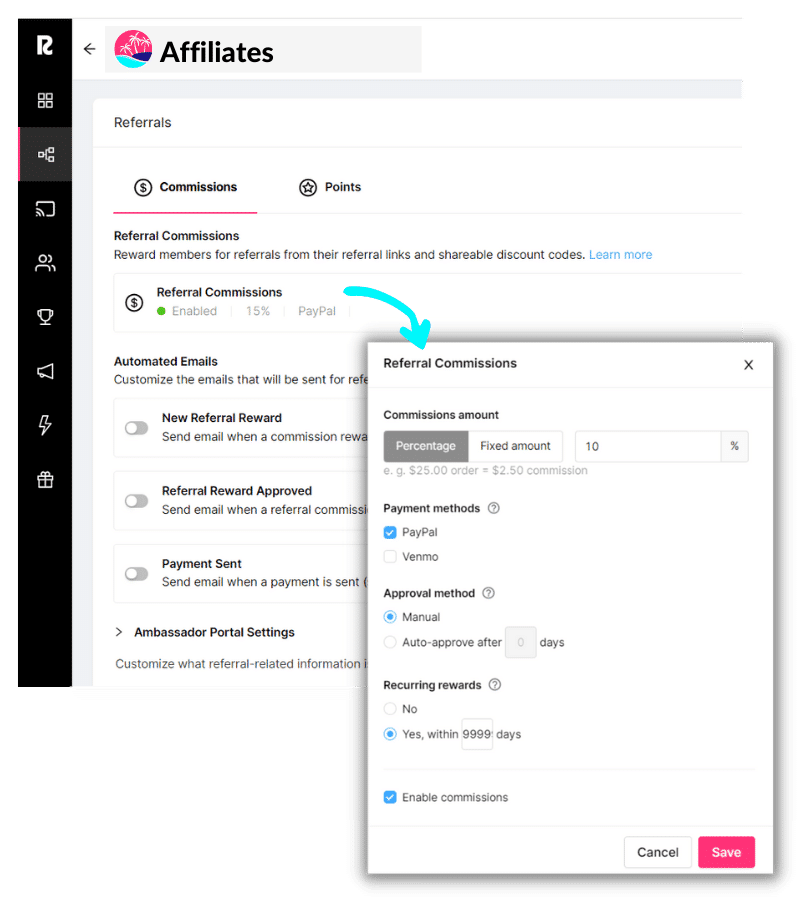
Percentage of sale, fixed amount per order, or tiered rates that step up with performance — set per program, with contact-level overrides for the individuals worth paying more. Recurring order tracking can credit repeat purchases from customers they originally referred.
Commission and reward settings →
Stage four
Pay and prove it
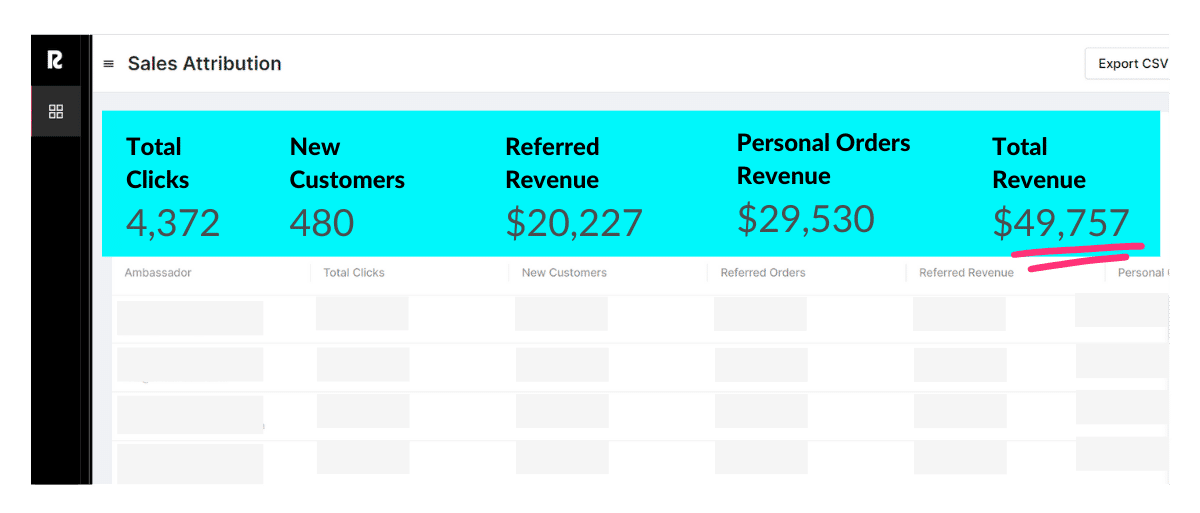
Automated payouts run the first Tuesday of every month with W-9 collection and 1099 filing handled, or send PayPal and Venmo batches yourself, or export a CSV and pay through your own system. Every order carries the attribution rule that credited it.
Automated payouts and attribution →
What you are probably comparing this against
An honest read on where each option stops.
A Shopify affiliate app
Commission tracking, bolted onto your cart- Tracks links and pays commission well
- No campaigns, briefs, or content collection
- No product seeding or reward tiers
- Social activity is invisible
- A second tool once you add ambassadors
A legacy affiliate network
Publishers, coupon sites, and a monthly minimum- Reach into established publisher inventory
- Heavy coupon and loyalty leakage
- Your own customers are not in it
- Long contracts and network fees
- Little control over who represents you
Roster
Affiliates, ambassadors, and creators in one account- Leakproof single-use codes on Shopify
- Five-rule attribution visible on every order
- Tiered rates plus per-person overrides
- Automated payouts with 1099 filing
- Separate programs, shared reporting
Brands running this today
Three programs, three very different shapes.
10% of DTC sales
Built a new sales channel from existing customers, from zero to over 100 ambassadors in under a year.
Blendtec · Home goods
Better buying experiences
Turned customers into a referral channel and gave the team one place to run it from.
Vooray · Activewear
5,400% growth
A two-person team went from ten people mentioning them to over 550 ambassadors, on a few hours a week.
GoBe Kids · Consumer goods
Is this the right fit for your brand?
Worth knowing before you spend thirty minutes with us.
$1M+ revenue
Or roughly 10,000 customers. Below that there usually are not enough advocates for a program to pay for itself.
A product people post about
Apparel, outdoor, food, beauty, and consumer goods work best. Considered purchases nobody photographs are harder.
Someone to own it
A few hours a week is realistic once it is running. Zero hours a week is not, for any platform.
A cart we can track
Shopify installs in minutes. BigCommerce, WooCommerce, Wix, and headless are documented, with an API route as backup.
Pricing starts at $599 per month, with a discount for paying annually.
Affiliate program FAQ
How is an affiliate different from a brand ambassador?
Affiliates are paid in commission and optimize for rate. Ambassadors are usually customers, motivated by product, status, and belonging as much as cash. Roster runs both, in separate programs with their own economics, because paying them the same way serves neither well.
Can we pay different rates to different affiliates?
Yes. Set a program rate, add tiers that step up with performance, and override the rate for individual contacts using contact tags — without building a separate program.
How do you stop coupon sites taking credit?
On Shopify, use leakproof codes. A fresh single-use code is generated when a customer clicks an affiliate link, so posting it publicly accomplishes nothing. Roster also will not mint a second code for a returning visitor on the same device and browser.
What happens to commission when an order is refunded?
A change to financial status, subtotal, total, referral ID, or discount code retriggers order processing and attribution, so rewards adjust automatically rather than being clawed back later.
Do you handle 1099s?
On automated payments, yes. W-9 and W-8BEN forms are collected during wallet setup and 1099s are filed for US affiliates who meet the IRS threshold. Payments made outside that system remain your responsibility.
Can affiliates be paid by PayPal or Venmo?
Yes, either through automated payouts where the affiliate chooses their withdrawal method, or by sending PayPal and Venmo batches directly from Roster using your own account.